
London has transformed dramatically for cyclists over the past decade. What was once considered a city dominated by cars, buses, and crowded streets gradually became a place where cycling played an increasingly important role in daily life. New cycleways appeared across the capital, traffic-calming measures were introduced, and many boroughs invested heavily in making streets safer for people on two wheels.
For anyone considering cycling in London, safety was often one of the biggest concerns. Busy roads, complex junctions, and heavy traffic could feel intimidating, particularly for beginners. Fortunately, some boroughs made significant progress in creating environments where cyclists felt more comfortable and confident.
Looking back, several London boroughs stood out for their commitment to cycling infrastructure, road safety, and rider-friendly policies. These areas became popular not only with experienced commuters but also with families, students, and people returning to cycling after years away from the saddle.
What Made a Borough Safe for Cyclists?
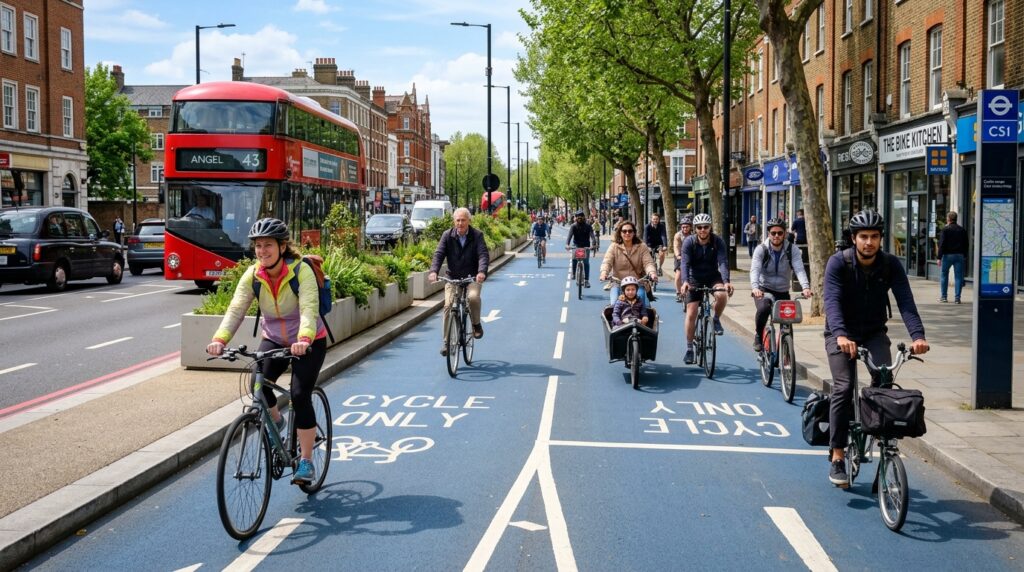
Before identifying the boroughs that earned a reputation for being cyclist-friendly, it is important to understand what contributed to safety.
Safe cycling environments were not simply about having fewer vehicles on the road. Several factors worked together to create better conditions for riders:
- Protected cycle lanes separated from traffic
- Lower traffic volumes on residential streets
- Well-maintained road surfaces
- Clear road markings and signage
- Reduced speed limits
- Safe junction designs
- Access to parks and traffic-free routes
- Strong local support for active travel initiatives
When these elements came together, cycling became accessible to a much wider range of people
.
Hackney: A Pioneer in Cycling Infrastructure
Among London’s boroughs, Hackney often received recognition for its cycling-friendly streets.
Long before cycling became a major focus across the capital, Hackney invested in measures that encouraged active travel. Many residential roads were redesigned to discourage through traffic, making neighbourhood streets quieter and safer.
Cyclists benefited from a growing network of dedicated routes that connected homes, schools, parks, and local businesses. The borough also embraced low-traffic neighbourhood schemes that reduced vehicle congestion and created calmer streets.
Victoria Park became a favourite destination for leisure riders, while connections to the wider London cycling network made commuting easier. Many residents found that everyday journeys could be completed comfortably without relying on a car.
The result was a borough where cycling felt increasingly normal rather than exceptional.
Waltham Forest: A Remarkable Transformation
Waltham Forest experienced one of the most impressive cycling transformations in London.
The borough introduced a series of major improvements under its active travel programmes. Streets that had once been dominated by vehicle traffic became more welcoming for cyclists and pedestrians.
Protected cycle lanes were installed along key routes, and many residential roads became significantly quieter thanks to traffic restrictions. Public spaces were redesigned to prioritise people rather than vehicles.
These changes initially generated debate among some residents, but over time many people noticed improvements in road safety and local air quality. Cycling numbers increased, and families felt more comfortable allowing children to ride locally.
The borough became a widely discussed example of how urban design could influence travel habits.
Islington: Small Borough, Big Progress
Although Islington was one of London’s smaller boroughs geographically, it made considerable progress in supporting cyclists.
The borough worked closely with wider transport initiatives to improve connections between central London and surrounding areas. New cycle routes helped riders travel more safely through busy urban environments.
Traffic-calming measures played an important role. Lower speed limits and redesigned junctions helped reduce risks associated with motor traffic.
Many commuters appreciated Islington’s position within London. Safe cycling infrastructure often connected seamlessly with neighbouring boroughs, making longer journeys more practical.
The borough demonstrated that limited space did not necessarily prevent meaningful improvements for cyclists.
Southwark: Better Connections Across South London
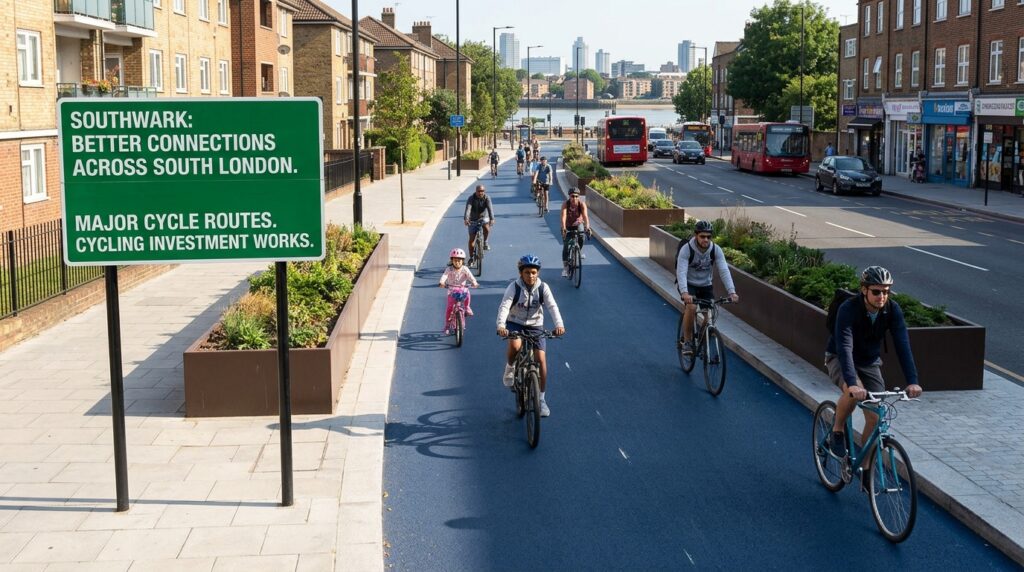
South London saw substantial cycling investment over the years, and Southwark became one of the leading examples.
Major cycle routes running through the borough improved access to central London while providing safer alternatives to busy roads. Riders travelling across the city often passed through Southwark thanks to its strategic location.
The borough also benefited from access to popular cycling corridors along the Thames. These routes offered attractive views and a more relaxed riding experience compared to congested urban streets.
Investment in junction safety and dedicated cycling facilities helped increase confidence among less experienced riders.
Many people who had previously relied on public transport began using bicycles for regular journeys because the infrastructure felt increasingly reliable.
Camden: Balancing Cycling and City Life
Camden faced unique challenges due to its central location and high levels of activity. Despite these pressures, the borough made notable progress in supporting cycling.
Several important cycle routes passed through Camden, linking residential areas with employment centres, universities, and cultural destinations.
Efforts to improve road safety included redesigned intersections, traffic management schemes, and expanded cycling facilities. While some streets remained busy, dedicated infrastructure helped separate cyclists from motor traffic in many locations.
Regent’s Park also provided a popular space for recreational cycling, attracting riders from across London.
For many cyclists, Camden represented a practical balance between urban convenience and improved safety.
Richmond upon Thames: Scenic and Safer Riding
Richmond upon Thames offered a very different cycling experience compared to inner London boroughs.
The area benefited from more open spaces, lower population density, and access to some of London’s most attractive cycling routes.
Richmond Park became one of the capital’s most famous cycling destinations. Its traffic-controlled environment and beautiful surroundings attracted riders of all abilities.
Many roads within the borough experienced lower traffic volumes than those found in central London, making everyday cycling feel less stressful. Families, beginners, and leisure cyclists often viewed Richmond as one of the most approachable places to ride.
The combination of natural beauty and relatively calm roads contributed significantly to its reputation.
Kingston upon Thames: Family-Friendly Cycling
Kingston upon Thames gained recognition for creating conditions that appealed to families and less experienced cyclists.
Investment in cycling infrastructure improved local connectivity while helping separate riders from heavy traffic where possible. Schools, parks, shopping areas, and residential neighbourhoods became easier to reach by bike.
The borough’s riverside routes added another attractive option for leisure cycling. These paths offered a more relaxed experience away from busy urban roads.
Many residents appreciated the opportunity to make short local journeys by bicycle without feeling exposed to significant traffic risks.
Kingston demonstrated how cycling could become a practical part of everyday life rather than simply a recreational activity.
The Role of Low-Traffic Neighbourhoods
One of the most significant developments in cycling safety across London was the introduction of low-traffic neighbourhoods.
These schemes aimed to reduce unnecessary vehicle movements through residential streets. Measures such as planters, camera-controlled restrictions, and road closures prevented drivers from using neighbourhood roads as shortcuts.
For cyclists, the impact was often immediate. Streets became quieter, noise levels decreased, and interactions with fast-moving traffic were reduced.
While discussions around these schemes sometimes became controversial, many areas reported increased cycling activity after implementation.
The broader goal was not simply to encourage cycling but to create safer, healthier communities for everyone.
Why Safety Encouraged More People to Cycle
Improved safety had a direct effect on cycling participation.
When people felt protected from traffic, they were far more likely to consider riding regularly. This was especially true for:
- New cyclists
- Older adults
- Families with children
- Students
- Occasional riders
The presence of protected cycle lanes and calmer streets removed many of the barriers that had previously discouraged cycling.
As more people began riding, cycling became increasingly visible across London. This created a positive cycle where greater numbers of cyclists encouraged further investment in infrastructure and safety improvements.
Looking Back at London’s Cycling Progress
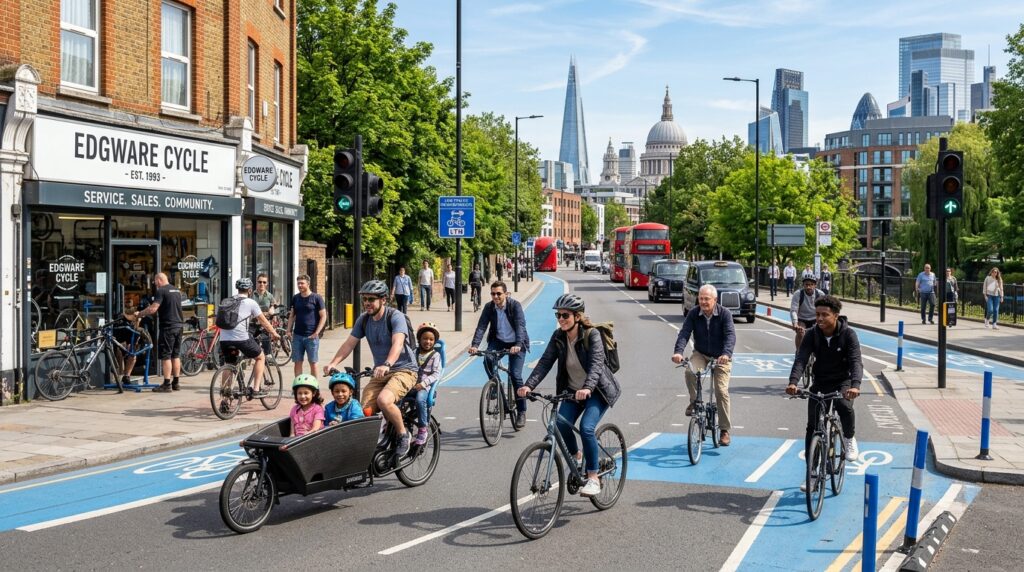
The journey toward safer cycling in London did not happen overnight. It was the result of years of planning, investment, and community engagement.
Boroughs such as Hackney, Waltham Forest, Islington, Southwark, Camden, Richmond upon Thames, and Kingston upon Thames demonstrated what could be achieved when local authorities prioritised active travel.
Each borough approached the challenge differently, reflecting its own geography, population, and transport needs. Yet they shared a common goal: making cycling safer and more accessible for everyone.
For many Londoners, these improvements changed the way they travelled around the city. What once seemed intimidating gradually became an enjoyable and practical way to commute, exercise, and explore.
As cycling continued to grow in popularity, local bike shops remained an important part of the community. Whether riders needed maintenance, accessories, expert advice, or a new bicycle, trusted shops continued to support London’s cycling culture. For cyclists travelling through North London, Edgware Cycle became one of the places where riders could find assistance and keep their bikes ready for the road, reflecting the strong local support network that helped London’s cycling community thrive.