
London takes on a completely different character after sunset. The busy streets begin to quieten, famous landmarks glow under carefully placed lights, and the city’s parks and riverside paths become peaceful places to ride. For many cyclists, night riding offers a welcome escape from daytime traffic while revealing a side of London that often goes unnoticed.
Whether you’re cycling home after work, heading out for an evening adventure, or simply enjoying cooler temperatures during the summer, riding after dark can be both enjoyable and safe. The key is knowing how to prepare, choosing suitable routes, and staying alert throughout your journey.
This guide covers everything you need to know before setting off on a night ride in London.
Why More Londoners Are Choosing Night Rides
Night cycling has become increasingly popular in recent years. Many riders enjoy the quieter roads, cooler weather, and calmer atmosphere that evening brings.
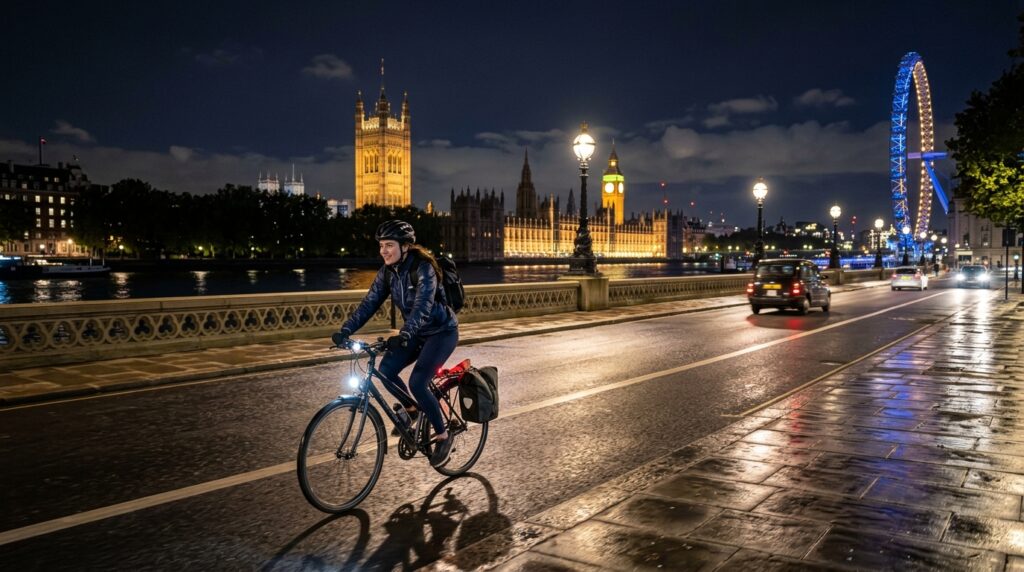
Traffic is often lighter outside peak commuting hours, allowing cyclists to enjoy a more relaxed ride. London’s illuminated skyline also creates spectacular views, making familiar routes feel completely new.
Cycling after dark can also be a great way to unwind after a busy day, offering both exercise and a chance to enjoy the city at a slower pace.
Check Your Bike Before You Leave
A quick inspection before every ride becomes even more important at night.
Take a few minutes to check:
- Front and rear lights
- Brake performance
- Tyre pressure
- Chain condition
- Gears
- Bell
- Reflectors
Small mechanical problems are easier to fix at home than on a dark roadside.
Keeping your bike clean and properly maintained also improves visibility and overall performance.
Use Bright Front and Rear Lights
Good lighting is the most important piece of equipment for night cycling.
Your front light helps you see the road ahead while allowing drivers, pedestrians, and other cyclists to notice you from a distance.
A bright rear light ensures vehicles approaching from behind can clearly see your position.
Rechargeable LED lights provide excellent brightness and are easy to keep ready for every ride.
Always check battery levels before leaving home.
Wear Clothing That Helps You Stand Out
Dark clothing blends into the surroundings after sunset.
Instead, wear brighter colours whenever possible and consider adding reflective clothing or accessories.
Reflective jackets, ankle bands, gloves, helmets, and backpacks all help improve visibility from different angles.
Small reflective details often make a significant difference when vehicle headlights shine towards you.
Choose Well-Lit Cycling Routes
Not every road is equally suitable after dark.
Whenever possible, choose:
- Protected cycle lanes
- Main roads with street lighting
- Popular cycling routes
- Well-maintained riverside paths
- Parks that remain open and properly lit
Avoid isolated shortcuts or unfamiliar roads with poor lighting, especially if you’re riding alone.
Planning your route before leaving makes the journey much more enjoyable.
Reduce Your Speed
Limited visibility means hazards may appear later than they would during daylight.
Riding slightly slower gives you more time to react to:
- Potholes
- Wet leaves
- Roadworks
- Pedestrians
- Animals
- Unexpected vehicles
There’s rarely any need to rush during an evening ride.
Watch the Road Surface Carefully
Road conditions can become harder to judge after sunset.
Look ahead for:
- Drain covers
- Loose gravel
- Broken glass
- Wet paint
- Uneven paving
- Speed bumps
Keeping your eyes further ahead allows more time to avoid obstacles safely.
Stay Visible at Junctions
Many cycling incidents occur at road junctions.
Approach every junction carefully, even if you have priority.
Make eye contact with drivers whenever possible and avoid assuming you’ve been seen.
Using clear hand signals before turning also helps other road users understand your intentions.
Be Careful Around Large Vehicles
Buses, delivery vans, taxis, and lorries can have significant blind spots.
Avoid riding alongside large vehicles, particularly when approaching traffic lights or junctions
.
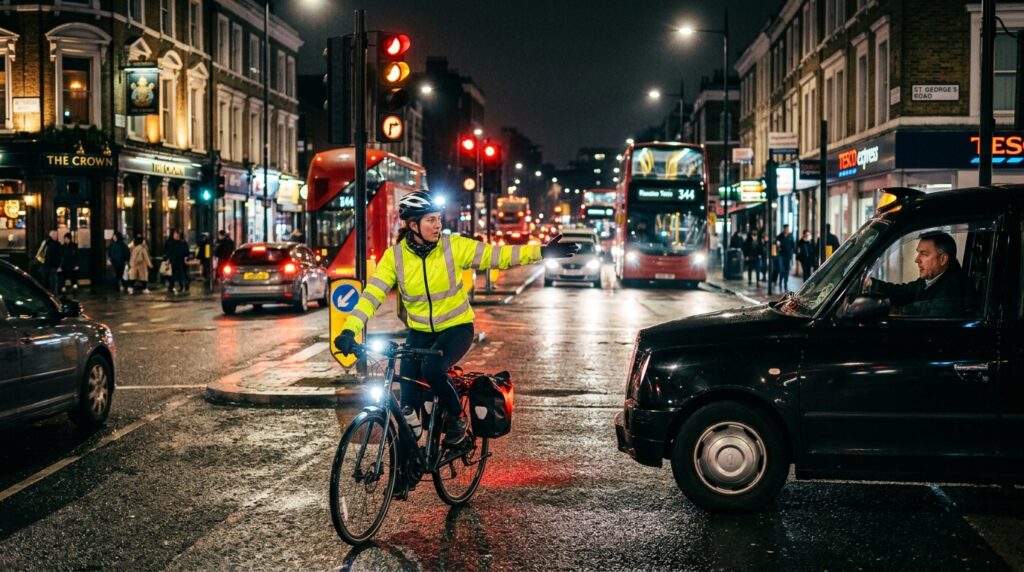
If you cannot clearly see the driver’s mirrors, they may not be able to see you either.
Waiting a few extra seconds is always the safer choice.
Keep Both Hands Ready
Night riding requires constant awareness.
Avoid using your phone while cycling, even briefly.
Keep both hands on the handlebars whenever possible so you can react quickly to unexpected situations.
If you need directions, stop safely before checking your phone or GPS.
Carry Essential Items
Packing a few small essentials can prevent minor problems from ending your ride.
Useful items include:
- Spare inner tube
- Mini pump
- Tyre levers
- Multi-tool
- Mobile phone
- Portable battery pack
- Water bottle
- Small first-aid kit
These items fit easily into a saddle bag or backpack and provide peace of mind.
Ride Defensively
Good cyclists constantly anticipate what other road users might do.
Expect vehicles to change lanes, pedestrians to step into the road, or parked cars to open doors unexpectedly.
Maintaining a safe distance from parked vehicles also reduces the risk of “dooring.”
A calm, defensive approach makes every ride safer.
Take Extra Care in Wet Weather
Rain can make London’s roads significantly more challenging.
Braking distances become longer, painted road markings become slippery, and reflections from streetlights may reduce visibility.
Reduce your speed and allow extra space between yourself and other road users.
Waterproof clothing also makes the ride much more comfortable.
Enjoy London’s Night-Time Landmarks
One of the greatest rewards of cycling after dark is seeing London’s famous attractions beautifully illuminated.
Popular evening routes include:
- Tower Bridge
- Westminster Bridge
- The South Bank
- Hyde Park
- Regent’s Park
- Canary Wharf
- The River Thames
These locations provide unforgettable views while offering relatively pleasant cycling experiences.
Ride With Friends When Possible
Night rides become even more enjoyable when shared.
Group rides improve visibility, provide extra confidence, and make mechanical problems easier to deal with should they arise.
Many London cycling clubs organise regular evening rides suitable for different experience lels
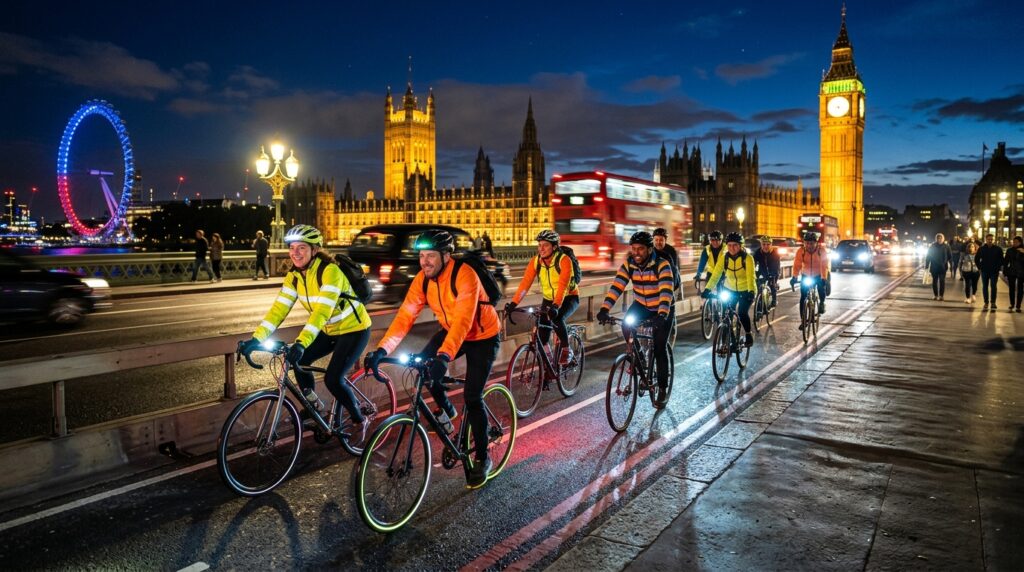
Joining one can also help you discover new routes and meet fellow cyclists.
Respect Other Path Users
Many shared paths remain busy after sunset.
Reduce your speed when approaching pedestrians, runners, or families.
Use your bell politely if needed, and always leave plenty of room when overtaking.
Courtesy helps create a safer and more enjoyable environment for everyone.
Know When to End the Ride
Even experienced cyclists recognise when conditions are no longer suitable.
Heavy rain, thick fog, strong winds, or extremely poor visibility may make postponing your ride the safest decision.
Listening to weather forecasts before leaving can help avoid unnecessary risks.
Sometimes the smartest choice is simply waiting for better conditions.
Final Thoughts
Night cycling offers a unique way to experience London. With quieter streets, cooler temperatures, and beautifully illuminated landmarks, evening rides can become some of the most enjoyable journeys you’ll take. By preparing your bike, using proper lights, wearing visible clothing, and riding with patience and awareness, you can explore the city confidently after dark. Before heading out on your next evening adventure, make sure your bicycle is ready for the road. Whether you need professional servicing, reliable accessories, or expert advice, Edgware Cycle is an excellent place to keep your bike in top condition so every night ride is smooth, comfortable, and safe.
Night Cycling in London: Everything You Need to Know
London takes on a completely different character after sunset. The busy streets begin to quieten, famous landmarks glow under carefully placed lights, and the city’s parks and riverside paths become peaceful places to ride. For many cyclists, night riding offers a welcome escape from daytime traffic while revealing a side of London that often goes unnoticed.
Whether you’re cycling home after work, heading out for an evening adventure, or simply enjoying cooler temperatures during the summer, riding after dark can be both enjoyable and safe. The key is knowing how to prepare, choosing suitable routes, and staying alert throughout your journey.
This guide covers everything you need to know before setting off on a night ride in London.
Why More Londoners Are Choosing Night Rides
Night cycling has become increasingly popular in recent years. Many riders enjoy the quieter roads, cooler weather, and calmer atmosphere that evening brings.
Traffic is often lighter outside peak commuting hours, allowing cyclists to enjoy a more relaxed ride. London’s illuminated skyline also creates spectacular views, making familiar routes feel completely new.
Cycling after dark can also be a great way to unwind after a busy day, offering both exercise and a chance to enjoy the city at a slower pace.
Check Your Bike Before You Leave
A quick inspection before every ride becomes even more important at night.
Take a few minutes to check:
- Front and rear lights
- Brake performance
- Tyre pressure
- Chain condition
- Gears
- Bell
- Reflectors
Small mechanical problems are easier to fix at home than on a dark roadside.
Keeping your bike clean and properly maintained also improves visibility and overall performance.
Use Bright Front and Rear Lights
Good lighting is the most important piece of equipment for night cycling.
Your front light helps you see the road ahead while allowing drivers, pedestrians, and other cyclists to notice you from a distance.
A bright rear light ensures vehicles approaching from behind can clearly see your position.
Rechargeable LED lights provide excellent brightness and are easy to keep ready for every ride.
Always check battery levels before leaving home.
Wear Clothing That Helps You Stand Out
Dark clothing blends into the surroundings after sunset.
Instead, wear brighter colours whenever possible and consider adding reflective clothing or accessories.
Reflective jackets, ankle bands, gloves, helmets, and backpacks all help improve visibility from different angles.
Small reflective details often make a significant difference when vehicle headlights shine towards you.
Choose Well-Lit Cycling Routes
Not every road is equally suitable after dark.
Whenever possible, choose:
- Protected cycle lanes
- Main roads with street lighting
- Popular cycling routes
- Well-maintained riverside paths
- Parks that remain open and properly lit
Avoid isolated shortcuts or unfamiliar roads with poor lighting, especially if you’re riding alone.
Planning your route before leaving makes the journey much more enjoyable.
Reduce Your Speed
Limited visibility means hazards may appear later than they would during daylight.
Riding slightly slower gives you more time to react to:
- Potholes
- Wet leaves
- Roadworks
- Pedestrians
- Animals
- Unexpected vehicles
There’s rarely any need to rush during an evening ride.
Watch the Road Surface Carefully
Road conditions can become harder to judge after sunset.
Look ahead for:
- Drain covers
- Loose gravel
- Broken glass
- Wet paint
- Uneven paving
- Speed bumps
Keeping your eyes further ahead allows more time to avoid obstacles safely.
Stay Visible at Junctions
Many cycling incidents occur at road junctions.
Approach every junction carefully, even if you have priority.
Make eye contact with drivers whenever possible and avoid assuming you’ve been seen.
Using clear hand signals before turning also helps other road users understand your intentions.
Be Careful Around Large Vehicles
Buses, delivery vans, taxis, and lorries can have significant blind spots.
Avoid riding alongside large vehicles, particularly when approaching traffic lights or junctions.
If you cannot clearly see the driver’s mirrors, they may not be able to see you either.
Waiting a few extra seconds is always the safer choice.
Keep Both Hands Ready
Night riding requires constant awareness.
Avoid using your phone while cycling, even briefly.
Keep both hands on the handlebars whenever possible so you can react quickly to unexpected situations.
If you need directions, stop safely before checking your phone or GPS.
Carry Essential Items
Packing a few small essentials can prevent minor problems from ending your ride.
Useful items include:
- Spare inner tube
- Mini pump
- Tyre levers
- Multi-tool
- Mobile phone
- Portable battery pack
- Water bottle
- Small first-aid kit
These items fit easily into a saddle bag or backpack and provide peace of mind.
Ride Defensively
Good cyclists constantly anticipate what other road users might do.
Expect vehicles to change lanes, pedestrians to step into the road, or parked cars to open doors unexpectedly.
Maintaining a safe distance from parked vehicles also reduces the risk of “dooring.”
A calm, defensive approach makes every ride safer.
Take Extra Care in Wet Weather
Rain can make London’s roads significantly more challenging.
Braking distances become longer, painted road markings become slippery, and reflections from streetlights may reduce visibility.
Reduce your speed and allow extra space between yourself and other road users.
Waterproof clothing also makes the ride much more comfortable.
Enjoy London’s Night-Time Landmarks
One of the greatest rewards of cycling after dark is seeing London’s famous attractions beautifully illuminated.
Popular evening routes include:
- Tower Bridge
- Westminster Bridge
- The South Bank
- Hyde Park
- Regent’s Park
- Canary Wharf
- The River Thames
These locations provide unforgettable views while offering relatively pleasant cycling experiences.
Ride With Friends When Possible
Night rides become even more enjoyable when shared.
Group rides improve visibility, provide extra confidence, and make mechanical problems easier to deal with should they arise.
Many London cycling clubs organise regular evening rides suitable for different experience levels.
Joining one can also help you discover new routes and meet fellow cyclists.
Respect Other Path Users
Many shared paths remain busy after sunset.
Reduce your speed when approaching pedestrians, runners, or families.
Use your bell politely if needed, and always leave plenty of room when overtaking.
Courtesy helps create a safer and more enjoyable environment for everyone.
Know When to End the Ride
Even experienced cyclists recognise when conditions are no longer suitable.
Heavy rain, thick fog, strong winds, or extremely poor visibility may make postponing your ride the safest decision.
Listening to weather forecasts before leaving can help avoid unnecessary risks.
Sometimes the smartest choice is simply waiting for better conditions.
Final Thoughts
Night cycling offers a unique way to experience London. With quieter streets, cooler temperatures, and beautifully illuminated landmarks, evening rides can become some of the most enjoyable journeys you’ll take. By preparing your bike, using proper lights, wearing visible clothing, and riding with patience and awareness, you can explore the city confidently after dark. Before heading out on your next evening adventure, make sure your bicycle is ready for the road. Whether you need professional servicing, reliable accessories, or expert advice, Edgware Cycle is an excellent place to keep your bike in top condition so every night ride is smooth, comfortable, and safe.