
The Early Morning Start
The alarm goes off at 6:30am, just as the first hint of daylight slips between the curtains. In many London homes, that sound signals the usual rush toward crowded trains and delayed buses. But for a commuter cyclist, the morning routine follows a different rhythm. There’s something quietly satisfying about preparing for a ride. A quick check of the weather forecast. A glance out of the window to judge the wind. Coffee brewing in the kitchen while cycling shoes sit ready by the door. The bike waits patiently in the hallway or locked just outside, dependable and uncomplicated. Before heading out, there’s the familiar ritual: check tyre pressure, squeeze the brakes, spin the pedals once or twice. Lights charged? Lock packed? Helmet strapped? These small habits take only a minute, but they make all the difference on London’s busy streets. By 7:15am, it’s time to roll.
Rolling Into the Morning Rush
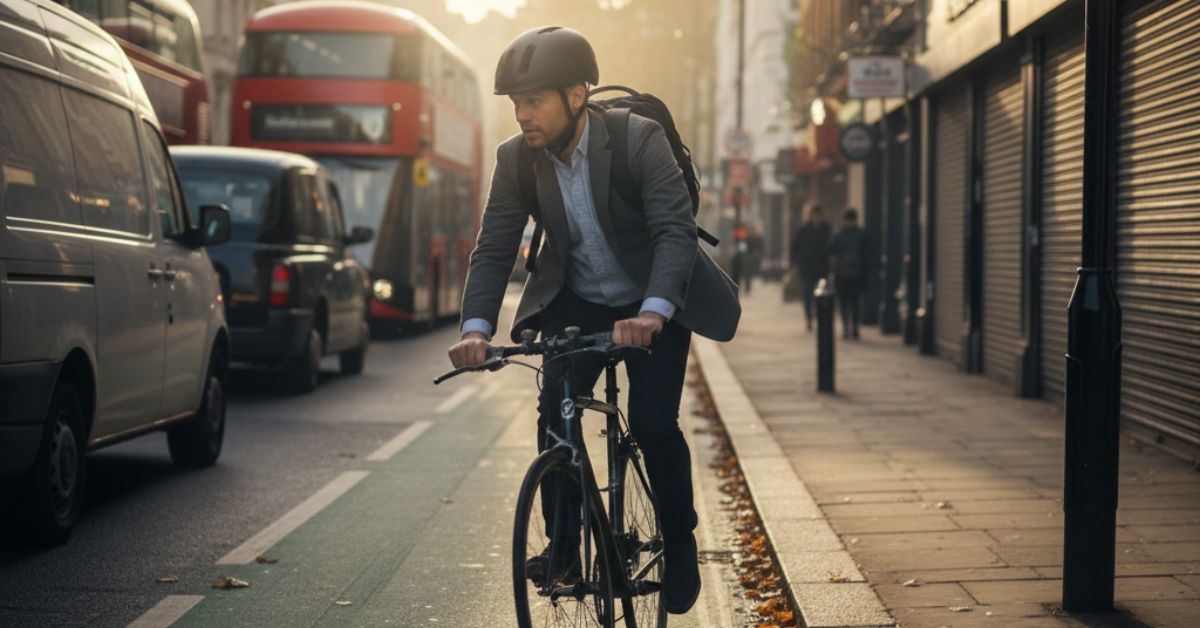
Stepping onto the saddle and pushing off into the street feels like switching gears mentally as well as physically. The air is cool, often crisp, and the city is just waking up. Delivery vans idle at the kerb. Shop shutters clatter open. A few early buses rumble past. Cycling in London during rush hour may sound daunting, but for many commuters, it’s the most efficient part of the day. While traffic builds and Underground platforms grow crowded, the cyclist glides forward in designated lanes or filters gently through slower vehicles. There’s an energy to the morning ride. Pedalling through neighbourhood streets, past parks, along main roads, and occasionally cutting through quiet back routes that only regular riders know. Traffic lights become natural intervals. Red means pause, catch your breath, observe the rhythm of the junction. Green means go. Unlike sitting in a carriage underground, sealed away from daylight, cycling keeps you connected to the city. You notice the changing seasons. In autumn, leaves gather along the kerb. In winter, your breath hangs in the air. Spring brings lighter mornings and birdsong in unexpected corners of central London.
Navigating London’s Streets
Every commuter cyclist develops a personal route. Some prefer the busier roads with clearer lanes and predictable traffic flow. Others opt for canal paths or quieter residential streets. Over time, you learn which junctions demand extra attention and which stretches allow you to settle into a steady pace. Awareness is everything. You read the road constantly: the slight wobble of a taxi that might pull in, the pedestrian poised at the crossing, the car door that could swing open without warning. It’s not stressful once you’ve built confidence. It becomes instinctive. There’s also a quiet camaraderie among cyclists. A nod at the lights. A quick “morning” when stopping side by side. During peak hours, you’ll see dozens of riders moving in sync, each on their own journey but sharing the same space and unspoken understanding. The ride demands focus, but it also clears the mind. Problems that seemed complicated over breakfast often feel manageable after twenty minutes of steady pedalling.
Arriving at Work Energised
Pulling up outside the office brings a small sense of accomplishment. While colleagues step off delayed trains or complain about crowded platforms, the cyclist arrives alert and awake. There’s usually a secure bike rack or cycle storage area. Lock the frame, secure the wheels, remove lights if needed. A quick change of clothes in the office facilities, perhaps a fresh shirt and a splash of water, and you’re ready for the day. What stands out most is the mental clarity. Cycling has a way of sharpening focus. Instead of easing into the morning slowly, you start with momentum. Meetings feel less draining. Concentration comes more easily. Even on challenging days, the knowledge that another ride awaits in the evening offers something to look forward to.
The Midday Conversations
At some point during the day, the topic of commuting comes up. It often does in London. Train delays, roadworks, rising fares. When you mention cycling, reactions vary.“Isn’t it dangerous?”. “Don’t you get soaked in the rain?”. “I could never do that.” But those who cycle regularly know that preparation makes all the difference. Waterproof layers for wet days. Good lights in winter. A reliable lock. Most importantly, a well-maintained bike. Rain, surprisingly, is less of an obstacle than people imagine. Some of the most peaceful rides happen under light drizzle, when roads are quieter and the city feels hushed. With the right gear, it’s simply another part of urban life.
The Evening Ride Home
The return journey has a different atmosphere. The city hums with end-of-day energy. Traffic is heavier, pavements busier, but the pace feels less rushed. You’re not heading toward responsibility; you’re leaving it behind. Sunset rides in London can be unforgettable. The sky shifts through shades of orange and pink, reflecting off glass buildings and river surfaces. Even in winter, when darkness falls early, the glow of streetlights and headlights creates its own character. The ride home becomes a transition space. It’s time to process the day, to let go of tension. Some cyclists take a slightly longer route in the evening, adding a few extra minutes simply for the pleasure of it. A short detour through a park or along a quieter stretch can transform the mood entirely. By the time you arrive home, there’s a sense of completion. You’ve not only travelled across the city twice, but you’ve also moved your body, breathed fresh air, and carved out space for yourself between work and home.
The Challenges Along the Way
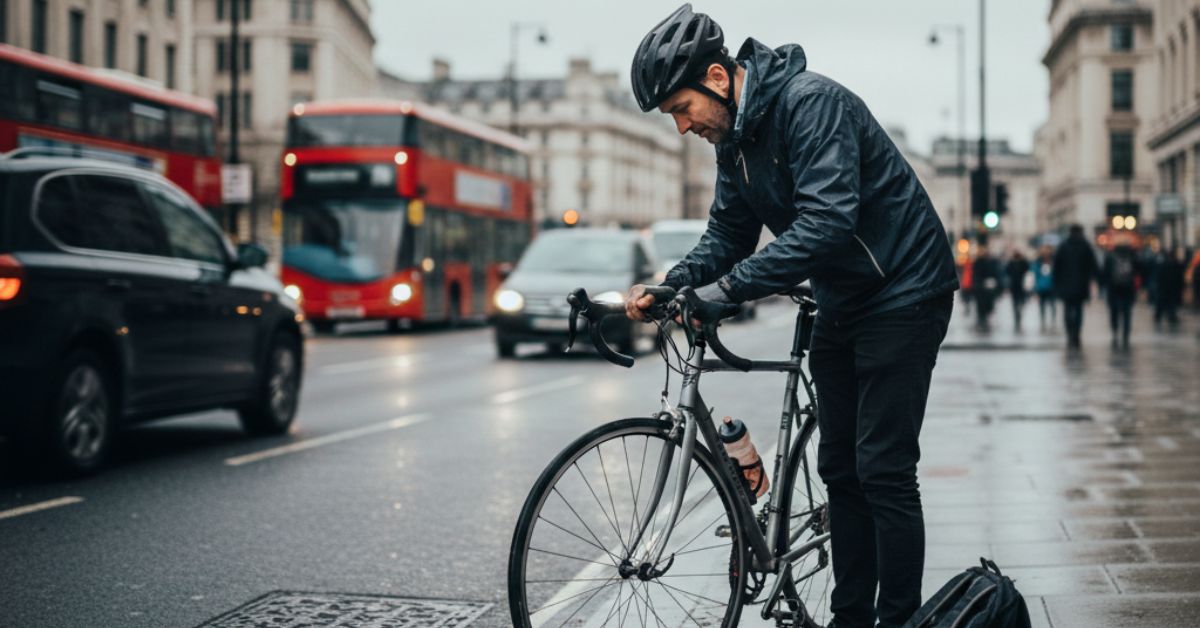
Of course, it’s not always effortless. There are days when the wind pushes back harder than expected. Days when a sudden downpour catches you halfway through the journey. Occasionally, a mechanical issue reminds you that bikes, like any machine, need care. A puncture on a busy morning can test anyone’s patience. But even these moments become part of the commuter’s story. You learn to carry a repair kit. You gain confidence fixing small problems yourself. And when something bigger arises, you know where to turn for professional help. City cycling builds resilience. It teaches awareness, patience, and adaptability. These skills extend beyond the road and into everyday life.
Why More Londoners Are Choosing Two Wheels
Over the past decade, cycling has become a defining feature of London’s streets. Dedicated lanes, improved infrastructure, and a growing awareness of health and environmental benefits have encouraged more people to give it a try. But beyond statistics and policies, the real appeal is personal. Cycling offers freedom. You’re not tied to timetables or traffic jams. Your commute time becomes predictable. Ten miles is ten miles, whether the roads are busy or not. Financially, it also makes sense. No daily fares. Minimal fuel costs. Maintenance is generally straightforward compared to owning a car in the capital. Most importantly, cycling changes how you experience London. Instead of passing through it passively, you engage with it. You feel its gradients, its weather, its pulse.
The End of the Day
Back home, the bike returns to its place by the door or in a secure storage area. Mud splashes might need wiping off. Chains occasionally need oiling. Tyres need checking every so often. These small acts of care are part of the routine. Over time, the bike becomes more than just transport. It carries you through early meetings, late evenings, unexpected detours, and moments of quiet reflection at traffic lights. A day in the life of a London commuter cyclist is not dramatic. It’s not extreme. It’s simply consistent. It’s about choosing movement over stillness, fresh air over crowded platforms, and independence over delay announcements. And behind every smooth commute is a reliable, well-maintained bike. Regular servicing, safety checks, and expert advice make all the difference. For many riders across North West London, trusted local support from shops like Edgwarecycles helps keep those daily journeys running smoothly, one pedal stroke at a time.