
London is a city in constant motion. Every day, millions of journeys take place across its streets by car, bus, train, and increasingly, by bike. As the capital works toward ambitious net-zero targets, cycling has moved from being a lifestyle choice to a critical part of the solution. Reaching net-zero means cutting greenhouse gas emissions as close to zero as possible, and balancing any remaining emissions. For a global city like London, that’s no small task. Transport remains one of the largest contributors to emissions. But unlike some sectors, transport emissions can be reduced quickly through smarter choices and cycling is one of the most powerful tools available. Let’s explore how two wheels are helping shape a cleaner future for London.
Transport and London’s Carbon Challenge
Road transport is a significant source of carbon emissions in London. Petrol and diesel vehicles not only release carbon dioxide but also contribute to air pollution, which affects public health across the city. While electric vehicles are part of the transition, they don’t solve everything. They still contribute to congestion, require energy to manufacture, and depend on electricity that must itself be generated sustainably. Cycling, by contrast, produces virtually zero emissions during use. No exhaust fumes. No fuel consumption. No engine noise. When more Londoners choose to cycle instead of drive for short journeys, emissions fall immediately. Considering that many urban trips are under five miles, the potential for change is enormous.
Short Journeys, Big Impact
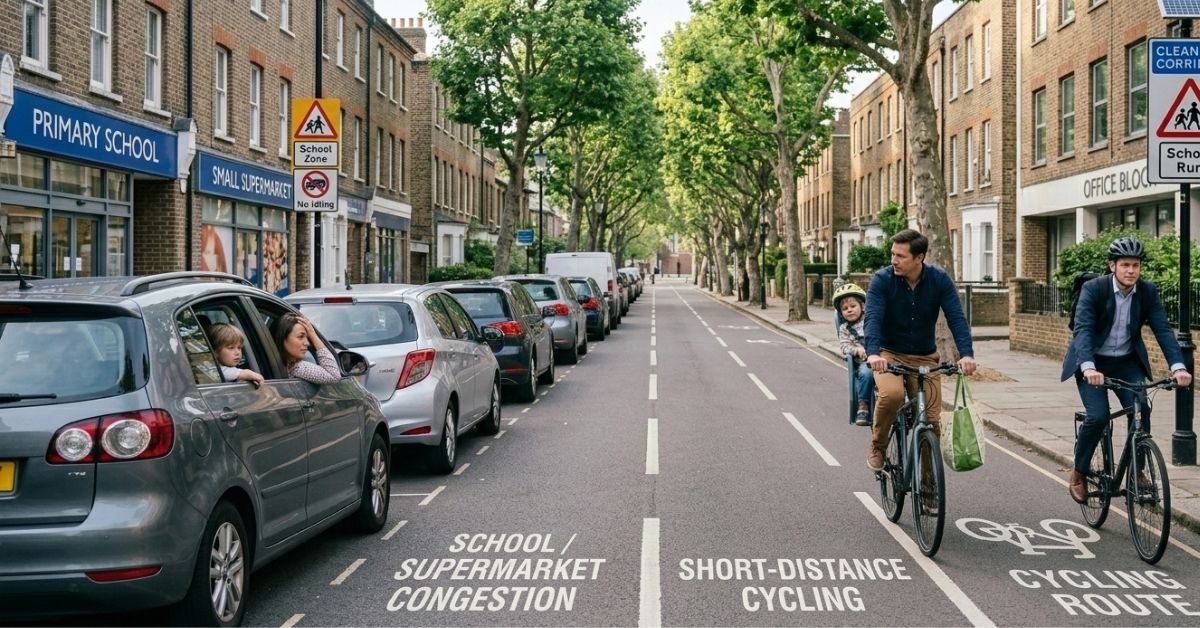
A surprising number of car trips in London cover distances that could easily be cycled in 20 minutes or less. School runs, quick supermarket visits, commuting to a nearby office these everyday journeys add up. If even a small percentage of these trips shift from cars to bikes, the environmental impact is significant. Reduced fuel use means lower carbon emissions. Fewer vehicles on the road also mean smoother traffic flow for essential journeys, reducing idle time and wasted fuel. Cycling doesn’t require new technology breakthroughs. It simply requires a shift in habits and infrastructure that makes riding safe and appealing.
Cleaner Air for Londoners
Net-zero is not only about carbon it’s about creating a healthier city. Air pollution has long been a serious issue in parts of London, contributing to respiratory illnesses and other health conditions. Cycling directly reduces harmful pollutants like nitrogen oxides and particulate matter by replacing motor vehicle trips. Policies introduced by Transport for London have increasingly supported cycling infrastructure alongside measures that discourage high-emission vehicles. The expansion of low-traffic neighbourhoods and protected cycle lanes encourages more people to ride. As cycling increases, pollution levels can decrease, especially in densely populated areas where traffic was once constant. The result is cleaner air not just for cyclists, but for everyone.
Infrastructure That Makes a Difference
Over the past decade, London has invested heavily in cycling infrastructure. Dedicated cycle lanes, improved junction designs, and safer road layouts have made riding more accessible and less intimidating. Cycle Superhighways and quieter neighbourhood streets allow riders to travel across the city with greater confidence. Public bike hire schemes such as Santander Cycles have made cycling more accessible to residents and visitors alike. Infrastructure matters because it shapes behaviour. When people feel safe, they are far more likely to leave the car at home. Every protected bike lane is more than paint on the road it’s an invitation to choose a lower-carbon way of moving.
Reducing Congestion and Energy Demand
Congestion is more than an inconvenience. Traffic jams increase fuel consumption and emissions, as vehicles idle or crawl along busy roads. By reducing the number of cars on the road, cycling helps ease congestion across the network. Fewer cars also reduce the city’s overall energy demand. Even electric vehicles rely on electricity that must be generated, transmitted, and stored. Bicycles require none of that during operation. The energy used to power a bike comes from the rider. In a city striving to reduce total energy consumption, promoting cycling is a practical and immediate step.
Supporting Sustainable Urban Planning
Cycling fits naturally into London’s broader urban sustainability goals. Compact, mixed-use neighbourhoods where people can live, work, and shop within short distances are ideal for bike travel. As new developments emerge across London, planners are incorporating cycle parking, secure storage, and bike-friendly access from the outset. Encouraging cycling reduces the need for large car parks and road expansions, freeing up space for housing, green areas, and public spaces. Less space dedicated to cars means more space for people.
Health Benefits That Support Climate Goals
There’s a powerful link between public health and climate policy. A healthier population reduces pressure on healthcare systems and contributes to a more resilient city. Cycling provides regular physical activity, improving cardiovascular health, mental wellbeing, and overall fitness. When people cycle to work instead of sitting in traffic, they build movement into their daily routines. This shift not only reduces emissions but also creates long-term health savings. A city where more people cycle is often a city with lower healthcare costs and improved quality of life.
Economic Advantages of a Cycling City
Net-zero transitions often raise concerns about cost. However, cycling is one of the most cost-effective climate solutions available. Compared to large-scale transport projects, cycle lanes and bike infrastructure require relatively modest investment. Yet they deliver substantial environmental and economic returns. Cyclists tend to support local businesses, stopping more frequently than drivers. Neighbourhoods with strong cycling culture often experience increased footfall and vibrant high streets. In this way, cycling supports not only environmental goals but also local economic resilience.
Behaviour Change and Cultural Shift
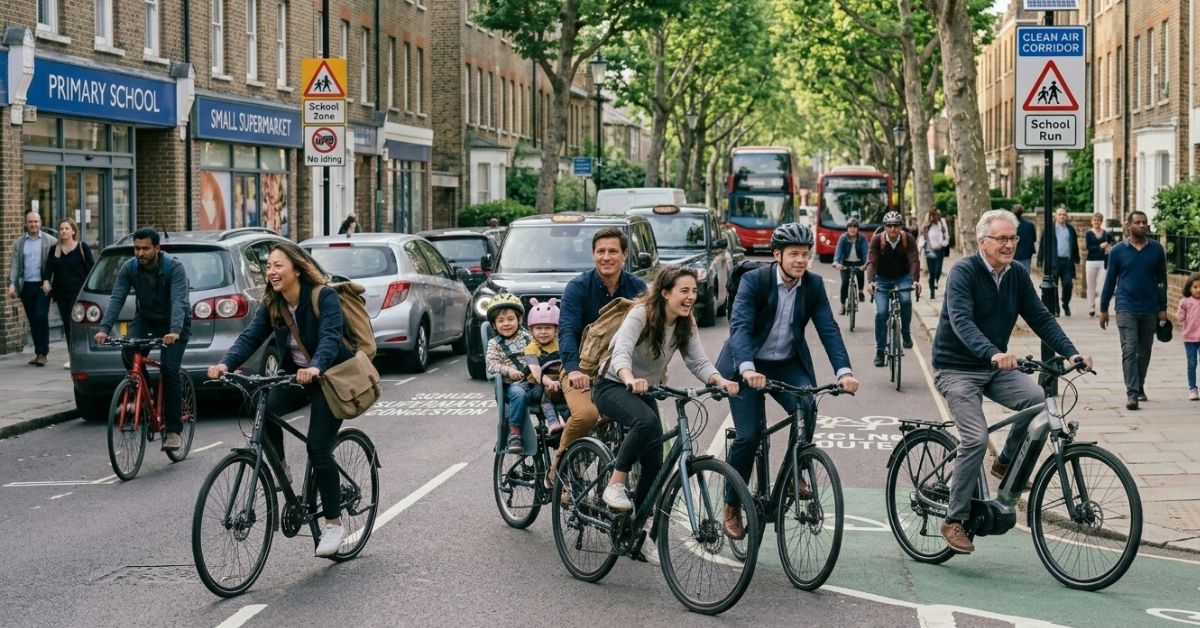
Infrastructure alone cannot achieve net-zero. Cultural change plays an equally important role. London’s cycling culture has evolved significantly. What was once seen as niche is now increasingly mainstream. Commuters in business attire ride alongside students and families. Electric bikes have expanded access to older riders and those travelling longer distances. The more visible cycling becomes, the more normal it feels. Social norms influence behaviour. When cycling is viewed as practical, convenient, and safe, participation rises naturally.
The Role of Policy and Leadership
Leadership matters in driving climate action. Successive policies have aimed to reduce car dependency while promoting active travel. Targets for reducing emissions, expanding cycle networks, and creating greener streets all align with London’s broader climate strategy. While challenges remain, progress is visible in the steady increase in cycling journeys year after year. Long-term commitment is essential. Net-zero cannot be achieved overnight, but consistent support for cycling keeps momentum moving forward.
Looking Ahead: A Greener London on Two Wheels
London’s path to net-zero will require action across every sector energy, housing, industry, and transport. Cycling alone will not solve the climate crisis. But it plays a vital and immediate role. Every ride replaces potential emissions. Every protected lane encourages another person to try cycling. Every local journey completed by bike brings the city one step closer to its climate goals. The beauty of cycling is its simplicity. It doesn’t rely on complex systems or future innovations. It relies on people choosing to move differently. As more Londoners embrace cycling, the benefits ripple outward—cleaner air, quieter streets, healthier communities, and lower emissions. Whether you’re commuting across the city or riding through your local neighbourhood, each journey matters. Supporting cycling initiatives, investing in proper gear, and encouraging local communities to ride—through platforms and initiatives like Edgwarecycle can help keep London moving steadily toward a net-zero future. Two wheels may seem small in the face of a global challenge, but in a city like London, they carry enormous potential.