
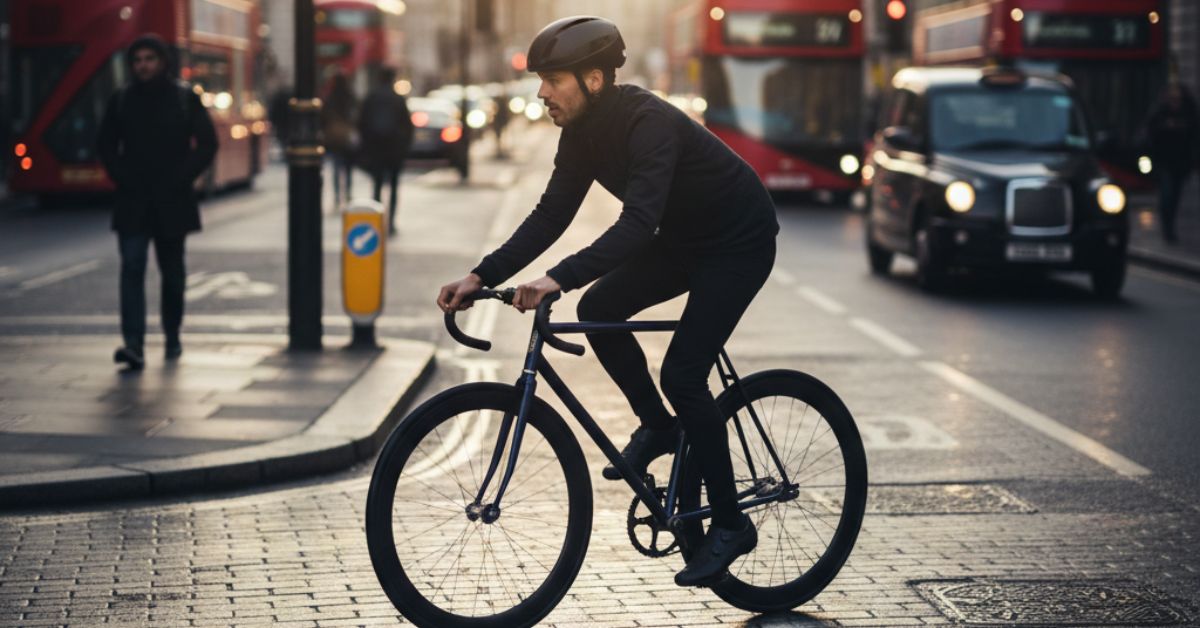
London has always moved to its own rhythm. From the clatter of black cabs along cobbled streets to the hum of commuters pouring out of Underground stations, the city pulses with motion. Over the past decade, however, another sound has joined the chorus the smooth, uninterrupted whirr of fixed-gear bikes cutting through traffic. What began as a niche preference has evolved into a defining feature of London’s urban cycling scene. Fixed-gear bikes, often called “fixies,” are simple machines. No freewheel. No coasting. When the wheels turn, so do the pedals. It is this mechanical honesty that has captured the imagination of riders across the capital. In a city known for complexity, the fixed-gear offers something refreshingly straightforward.
From Track to Street
The fixed-gear bicycle was not born on the streets of London. Its roots lie in velodromes, where track cyclists rely on fixed drivetrains for maximum efficiency and control. For years, these bikes were confined to competitive racing circles. But like many trends, it took creative urban riders to reimagine the fixed-gear’s purpose. In the early 2000s, messengers and underground cycling communities began embracing fixies for city riding. Their light frames, low maintenance needs, and clean aesthetics made them ideal for weaving through tight streets and busy junctions. What started as a practical choice quickly became a cultural statement. London, with its dense network of roads and growing cycling infrastructure, provided fertile ground. As cycle lanes expanded and traffic congestion intensified, riders sought bikes that felt agile and responsive. The fixed-gear answered that call.
Simplicity in a Complex City
There is something almost meditative about riding a fixed-gear bike through London. Without gears to shift or mechanisms to adjust, the rider’s focus sharpens. Every pedal stroke matters. Every turn requires intention. In a city where distractions are constant buses pulling in, taxis cutting across lanes, pedestrians stepping off kerbs the fixed-gear demands presence. Riders often describe the experience as deeply connected, as if they are part of the machine rather than simply operating it. This simplicity also appeals to those tired of high-maintenance bikes. Fewer moving parts mean fewer mechanical issues. For urban cyclists who rely on their bikes daily, that reliability is invaluable.
Aesthetic Identity and Self-Expression
Beyond practicality, fixed-gear culture in London has flourished because of its visual appeal. These bikes are stripped back, clean, and purposeful. Frames come in bold colours or understated steel. Handlebars range from classic drops to minimal bullhorns. Each detail reflects the rider’s personality. Cycling through neighbourhoods like Shoreditch or Hackney, you will see bikes that look as carefully curated as the outfits of their owners. Fixed-gear culture has blended seamlessly with London’s creative scene. Designers, photographers, musicians, and students have all embraced the fixie as both transport and expression. Social media has amplified this aesthetic. Photos of sleek bikes leaning against brick walls or parked outside coffee shops have turned everyday rides into visual stories. In many ways, fixed-gear bikes have become part of the city’s street style.
Community on Two Wheels
Perhaps the most powerful force behind the rise of fixed-gear culture is community. London’s cycling scene is diverse, but fixed-gear riders often form particularly tight-knit groups. Informal meetups, night rides, and alleycat races bring together cyclists from different boroughs. These gatherings are not just about speed; they are about shared experience. There is a certain camaraderie that comes from riding a bike that demands constant effort. Alleycat races, inspired by messenger competitions, have become a staple in the capital. Participants navigate checkpoints scattered across the city, testing not only their fitness but their knowledge of London’s labyrinthine streets. The atmosphere is energetic, competitive, and welcoming all at once. Through these events, new riders find mentors and friends. The fixed-gear world, while stylish, is rarely exclusive. Many seasoned riders are eager to help newcomers learn techniques such as skid stopping or maintaining cadence in traffic.
Urban Fitness and Control
Riding a fixed-gear bike is physically demanding. Without gears, climbing hills in areas like Hampstead or Highgate requires strength and determination. Descending can be equally challenging, as riders must control their speed through leg resistance. This physical engagement is part of the appeal. In a city where gym memberships are common but time is scarce, the daily commute becomes a workout. Fixed-gear cyclists often speak of improved leg strength, endurance, and overall fitness. There is also a sense of control that comes with mastering a fixie. Because coasting is impossible, riders learn to anticipate traffic lights, road gradients, and pedestrian movement. Over time, this anticipation sharpens road awareness. Many cyclists find that their riding skills improve significantly after switching to fixed-gear.
The Influence of Infrastructure
London’s investment in cycling infrastructure has quietly supported the growth of fixed-gear culture. Protected lanes, low-traffic neighbourhoods, and expanded cycle routes have made urban riding safer and more appealing. As more people feel confident commuting by bike, curiosity grows. Some begin with geared hybrids or road bikes and eventually experiment with fixed-gear setups. The city’s relatively flat central areas also make fixies more accessible than in hillier regions. Cycle-friendly initiatives have not only increased overall ridership but also diversified it. Students, creatives, office workers, and freelancers all contribute to the fixed-gear presence on London’s roads.
Challenges and Misconceptions
Despite its popularity, fixed-gear cycling is not without controversy. Some critics argue that riding without traditional brakes can be unsafe. In reality, most fixed-gear riders in London use at least one front brake, complying with UK road laws. There is also a misconception that fixies are purely about style. While aesthetics play a role, long-term riders know that fixed-gear cycling requires discipline and awareness. It is not simply about looking good at traffic lights; it is about understanding your machine and your environment. Weather poses another challenge. London’s rain-slicked roads demand caution, especially for those who rely on skid stopping. Yet many riders adapt, fitting appropriate tyres and adjusting their techniques to suit the conditions.

A Sustainable Statement
In a time when conversations about climate change and urban air quality dominate headlines, cycling represents more than personal choice. It is part of a broader shift toward sustainable transport. Fixed-gear bikes, with their minimal components and durability, align well with this mindset. They are built to last. Their simplicity reduces waste and encourages repair rather than replacement. As more Londoners reconsider their reliance on cars and public transport, the fixed-gear stands as a symbol of independence. It embodies the idea that movement through the city can be efficient, low-impact, and even joyful.
Looking Ahead
The rise of fixed-gear culture in the capital shows no sign of slowing. What began as a subculture has woven itself into London’s cycling identity. New riders continue to discover the satisfaction of direct drive, while established cyclists refine their setups and techniques. Bike shops across the city have responded to growing interest, offering custom builds, lightweight frames, and advice tailored to urban riding. Conversations about geometry, gearing ratios, and tyre width have become common in cafés and workshops alike. Ultimately, the appeal of fixed-gear cycling lies in its balance of challenge and freedom. It strips cycling back to its essentials while opening doors to creativity and connection. In a city that never truly stands still, the fixed-gear rider remains in constant motion, propelled by nothing more than their own effort. As London evolves, so too will its cycling culture. Yet the core values that fuel the fixed-gear movement simplicity, community, resilience are unlikely to fade. Whether you are a seasoned rider or simply curious about trying something different, the capital offers endless streets to explore. And if you find yourself inspired to join the movement, local specialists such as Edgwarecycles can help you begin your journey into the world of fixed-gear riding.