
Is Your Bicycle Taking Up More Space at Home Than You Expected?
Buying a bicycle is usually an exciting decision. You start thinking about where you will ride, how it will fit into your daily routine and the places you might visit. However, one thing that people do not always consider before making a purchase is where they are going to keep their bicycle when they are not riding it.
For people living in flats, smaller houses or shared accommodation, bicycle storage can quickly become a challenge. A bike that seemed easy to manage in the shop may feel much larger when it is standing in a hallway or taking up valuable space in a living room.
The good news is that there are several ways to make bicycle storage more practical. From choosing a suitable bike to making better use of available space, a little planning can help you enjoy cycling without allowing your bicycle to take over your home.
1. Think About Storage Before Buying a Bicycle
Many people focus on the frame size, colour, gears and price when choosing a bicycle. These are all important factors, but storage deserves attention too.
A large mountain bike, for example, may be suitable for off-road riding, but its wider handlebars and tyres can make it harder to store in a narrow hallway. A hybrid or city bike may have a more practical shape for everyday use, depending on its design.
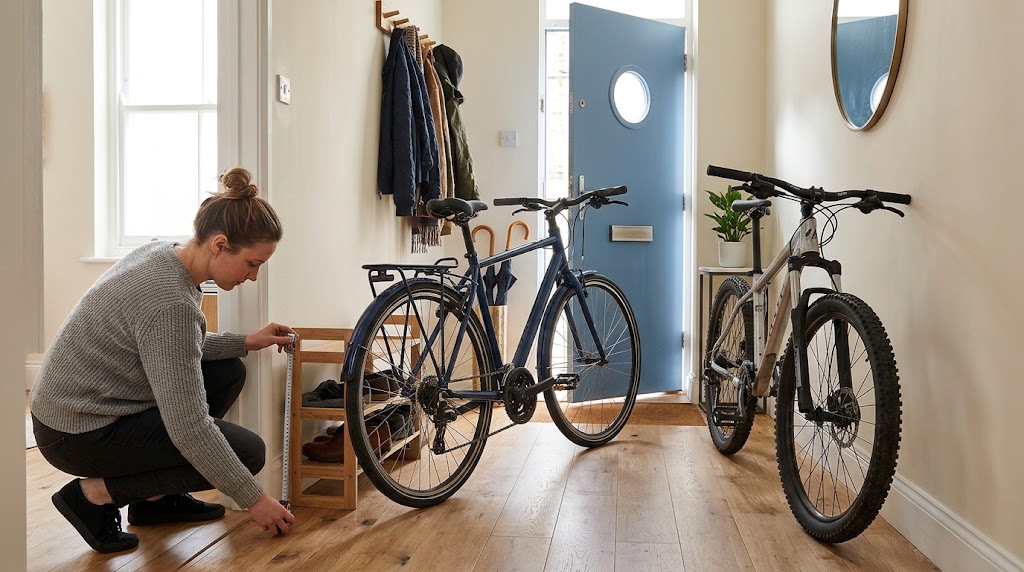
Before buying, think about where the bicycle will stay when you are not using it. Measure the available space and consider the width of doorways, staircases and storage areas.
It is also worth checking whether you can move the bicycle comfortably through your home. A bike that fits in a storage area but is difficult to carry through the entrance may become inconvenient over time.
2. Small Homes Can Make Bicycle Storage Difficult
Living in a flat or compact property often means making careful use of every available space. A bicycle can occupy a surprising amount of room, especially when there is no dedicated storage area.
Hallways are common places for people to leave their bikes, but they can become difficult to use when the bicycle blocks access. Keeping it near a doorway may also create an obstacle for other people in the household.
Bedrooms and living rooms are sometimes used as alternatives, although this can make the space feel crowded.
If you share your home with family members or housemates, it is important to consider their needs as well. A suitable storage arrangement should keep the bicycle accessible without making everyday movement around the property difficult.
3. Consider a Folding Bicycle for Limited Space
If storage is a major concern, a folding bicycle may be worth considering.
Unlike a conventional bicycle, a folding model can be reduced to a more compact size when it is not being ridden. This can make it easier to store in a cupboard, under a desk or in another suitable area of your home.
Folding bikes can also be useful for people who combine cycling with public transport. Their compact design may make them easier to manage when travelling by train, although you should always check the relevant transport operator’s rules.
Before choosing one, consider how frequently you will fold and unfold it, how much it weighs and how comfortable it feels to ride.
Not every folding bicycle is the same. Frame design, wheel size, gearing and riding position can all influence its suitability for your needs.
The best option is one that provides a comfortable ride while also fitting into your available storage space.
4. Make Better Use of Vertical Space
If you have limited floor space, using the walls may provide another storage option.
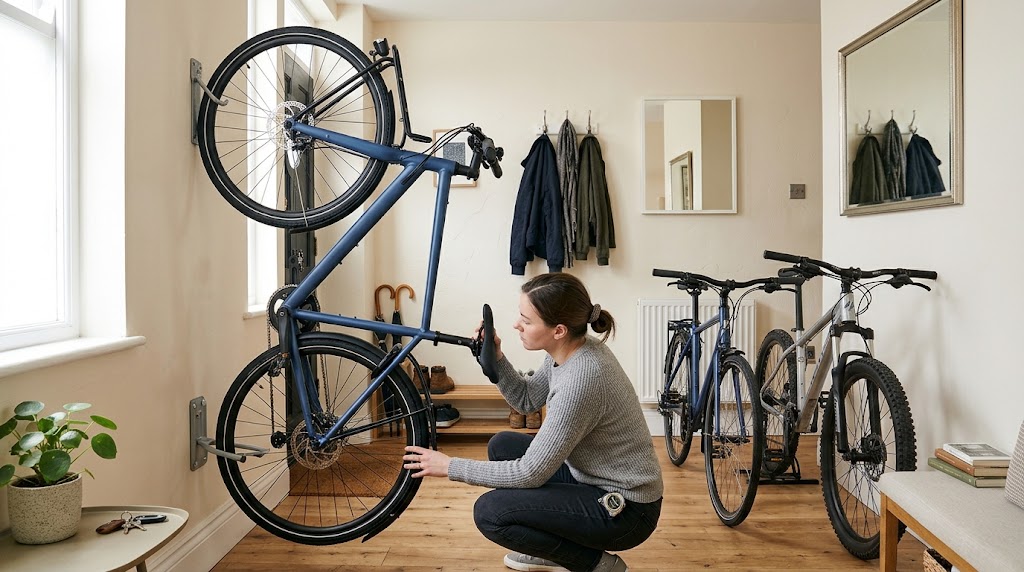
Wall-mounted bicycle hooks and storage racks can help lift a bicycle off the floor, leaving more room for other household items. Some systems hold the bicycle by a wheel, while others support the frame.
However, before installing any wall-mounted equipment, check that the wall is strong enough and that the fixing system is suitable for the weight of your bicycle.
You should also consider how easily you can lift the bike into position. A heavy electric bicycle, for example, may not be practical to hang on a high wall hook.
Another option is a freestanding bicycle rack. These can be useful when drilling into walls is not possible, particularly in rented properties.
Whichever method you choose, make sure the bicycle is stable and cannot fall over easily.
5. Keep Your Bicycle Clean Before Bringing It Indoors
Storing a bicycle inside can help protect it from outdoor weather and reduce the risk of theft. However, it also means paying attention to cleanliness.
After riding in wet conditions, tyres can bring mud, water and road dirt into your home. This can make floors dirty and create extra cleaning work.
A simple routine can help prevent this problem. Wipe down the tyres and frame when necessary, particularly after riding through muddy or rainy areas.
A small mat beneath the bicycle can catch dirt and water. You could also keep a cloth and basic cleaning supplies nearby so that cleaning does not become a difficult task.
Avoid putting a wet bicycle away in a completely enclosed space without allowing it to dry. Moisture left on metal components can contribute to corrosion over time.
Keeping your bike clean is not only helpful for your home; it also makes it easier to notice damage or worn components.
6. Remember That Electric Bikes Need Extra Consideration
Electric bicycles can be heavier and bulkier than many conventional models because of their motors and batteries.
This means that storage arrangements need a little more thought. Carrying an electric bike up several flights of stairs or lifting it onto a wall rack may not be practical for everyone.
If you own an electric bicycle, consider whether you have enough space to store it securely and access it without difficulty.
Follow the manufacturer’s instructions for battery removal, charging and storage. Use the correct charger and avoid charging the battery in unsuitable conditions or leaving it unattended while charging.
A ground-level storage area is often more convenient for a heavier electric bicycle, particularly if you use it regularly.
7. Protect Your Bicycle While It Is Stored
Finding enough space is only one part of the problem. You also need to make sure your bicycle remains in good condition while it is stored.
Keep it away from areas where it could easily be knocked over or damaged. Avoid placing heavy objects against the wheels, handlebars or frame.
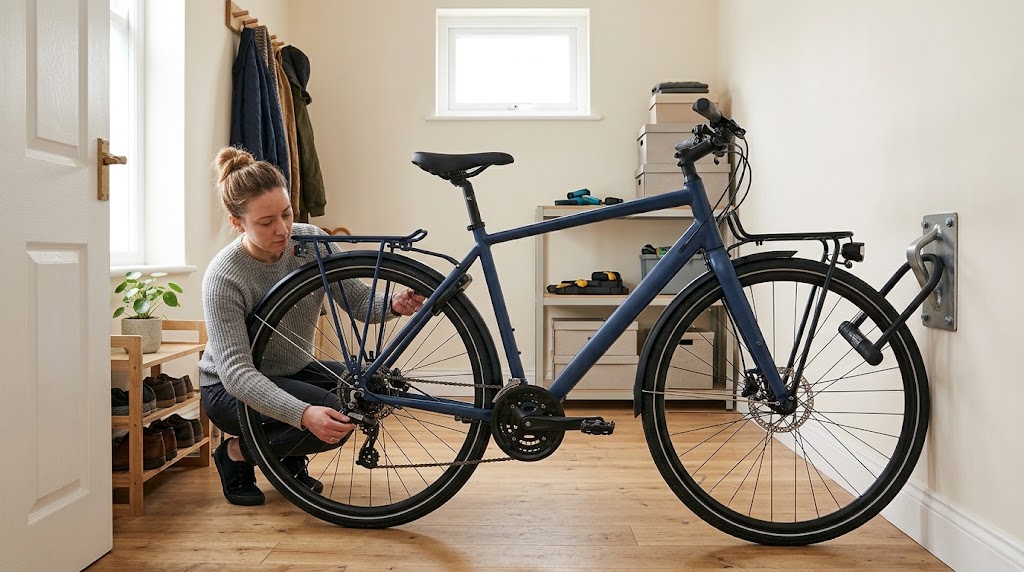
If the bicycle is stored in a shared garage or communal area, use a suitable lock and check the security arrangements. A storage location should not automatically be considered safe simply because it is indoors.
It is also sensible to check the tyres periodically, particularly if the bicycle remains unused for long periods.
Regularly inspect the brakes, chain and other important components before returning to riding. A bicycle that has been stored for several weeks may need a quick check before it is ready for the road.
8. Choose a Bicycle That Fits Your Lifestyle
There is no single bicycle that suits every home or rider. Your storage space, riding habits and daily requirements should all influence your decision.
If you have a spacious garage, a full-sized mountain bike or hybrid may be easy to accommodate. If you live in a small flat, a folding bicycle could offer a more convenient arrangement.
You should also consider how often you ride. A bicycle used every day needs to be easy to access, while a bike used occasionally may be stored in a less accessible area.
Think about your budget as well. Storage equipment, locks and cleaning accessories can add to the overall cost, so include these when planning your purchase.
Taking time to consider these details can help you avoid buying a bicycle that becomes difficult to manage once you bring it home.
Conclusion
A bicycle should make everyday life easier, not leave you struggling to find space at home. Whether you live in a compact flat or a larger property, choosing the right bicycle and planning its storage can make a noticeable difference.
Consider the available space before buying, explore folding models if necessary and use suitable storage equipment to keep your bike secure and organised. Regular cleaning and basic maintenance will also help protect it while it is stored indoors.
If you are looking for a bicycle that suits your riding habits and available space, Edgware Cycles can help you explore different options. Choosing a bike that works both on the road and at home can make cycling a much more convenient part of your everyday routine.